
Introduction
Data modeling is one of the most important steps in designing and building a database. Before storing information in any system, businesses need a clear structure for how that data will be organized, connected, and maintained. This is where data modeling becomes essential.
Think of data modeling as creating a blueprint for a database. Just as architects use blueprints to design a house before construction begins, database designers use data models to plan how information will be stored and how different data elements will relate to each other.
A well-designed data model helps organizations improve data quality, reduce duplication, maintain consistency, and make reporting easier. Whether you are building a small application or a large enterprise data warehouse, understanding data modeling is a foundational skill.
Components of Data Modeling
Every data model is built using a few core components:
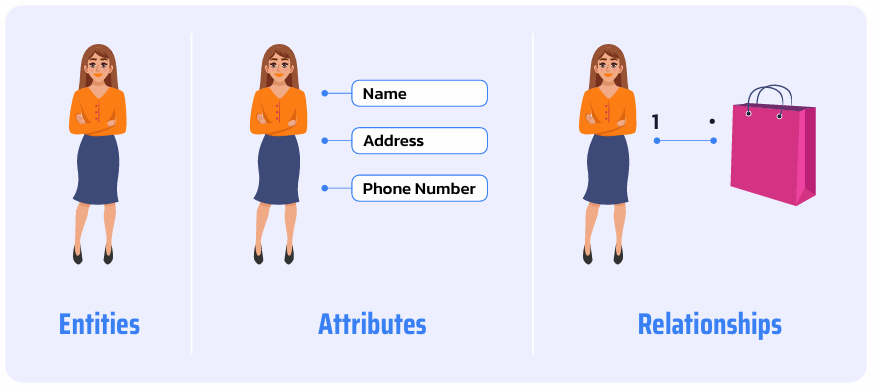
Entities
Entities are the major objects or concepts for which data is stored.
Examples include:
- Customer
- Product
- Employee
- Order
- Supplier
In simple terms, entities are usually nouns that represent something important to the business.
For instance, in a retail company, “Customer” and “Product” are common entities.
Attributes
Attributes are the specific details that describe an entity.
For a Customer entity, attributes may include:
- Customer ID
- Name
- Address
- Phone Number
For a Product entity, attributes may include:
- Product ID
- Product Name
- Category
- Price
Attributes help provide meaningful information about each entity.
Relationships
Relationships define how entities are connected to one another.
Examples:
- A customer places an order
- A product belongs to a category
- An employee works in a department
Relationships are critical because they show how data flows across the database.
Types of Data Models
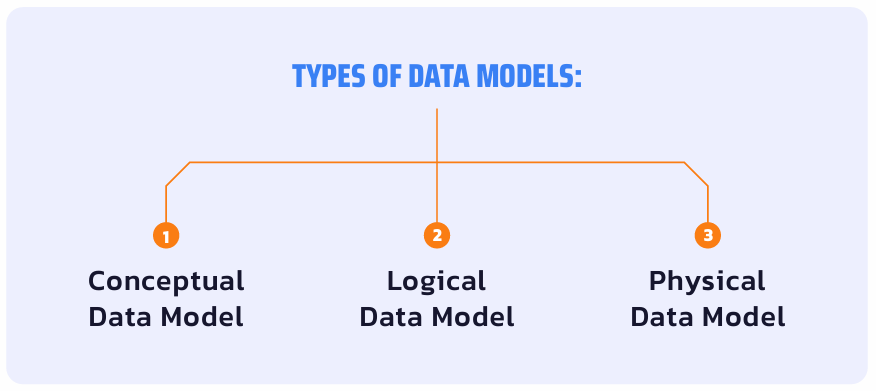
There are 3 types of data models:
Conceptual Data Model, Logical Data Model, Physical Data Model
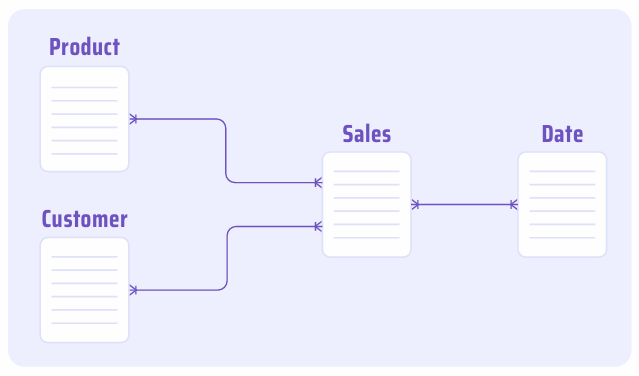
Conceptual Data Model
The conceptual model provides a high-level overview of the system. It focuses on identifying key entities and the relationships between them.
This model does not include technical details such as data types or keys.
It is mainly used for business discussions and planning.
Example:
- Customer places Order
- Order contains Product
Think of it as a bird’s-eye view of the entire system.
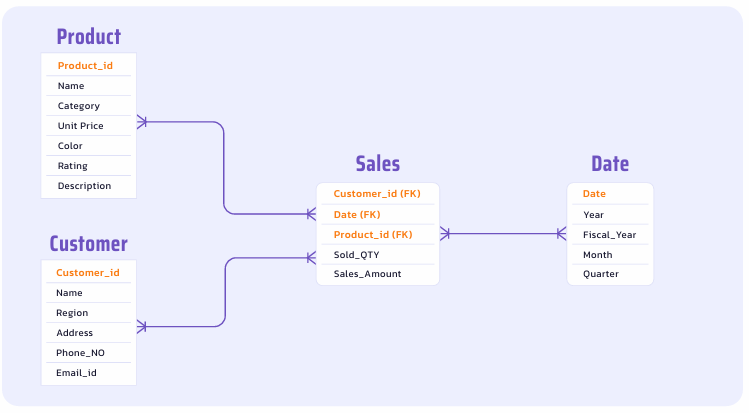
Logical Data Model
The logical model adds more detail than the conceptual model. It defines:
- Attributes
- Primary keys
- Relationships
- Normalized structure
This model is technology-independent, meaning it does not depend on a specific database system.
It is like the floor plan of a house, showing rooms, walls, and layout before construction begins.
Physical Data Model
The physical model describes how data will actually be implemented in a database system such as MySQL, PostgreSQL, SQL Server, or Oracle.
It includes:
- Table names
- Column data types
- Indexes
- Constraints
- Storage details
This is the final version used by developers and database administrators.
Think of it as the real construction stage after planning is complete.
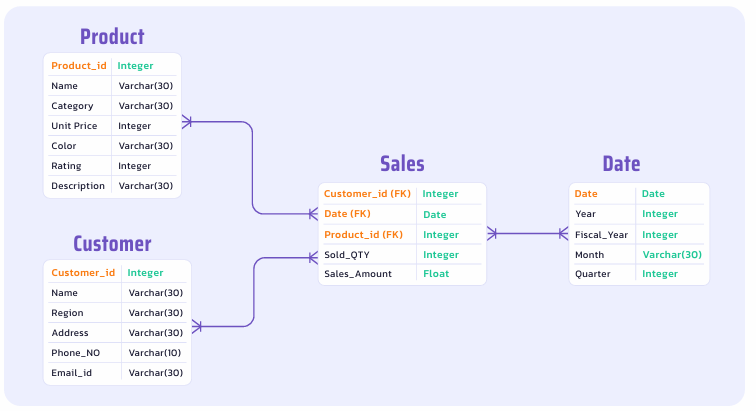
Types of Tables in Data Modeling
Data modeling establishes a connection and flow of data between tables, typically
consisting of fact tables surrounded by dimension tables, along with the relationships
between these tables.
Fact Table
A fact table stores measurable business events, metrics, or transactional data.
Examples:
- Sales amount
- Quantity sold
- Revenue
- Discount
- Profit
Fact tables usually contain:
1. Facts (Measures)
Numeric values used for analysis.
Example:
- Amount
- Quantity
- Revenue
2. Foreign Keys
Columns that connect to dimension tables.
Example:
- customer_id
- product_id
- date_id
Example of Sales Fact Table
| customer_id | product_id | quantity | revenue |
|---|---|---|---|
| 101 | P01 | 2 | 500 |
This table stores actual business transactions.
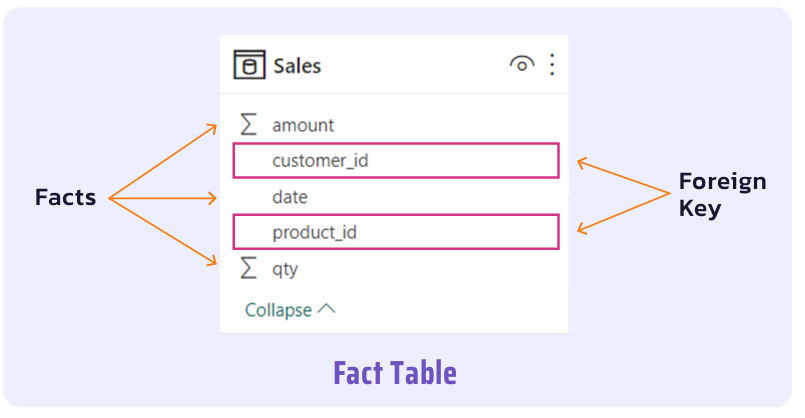
Facts: amount, date, quantity. These columns represent the business facts.
Foreign keys: customer_id, product_id. These columns contain foreign keys
that link to dimension tables.
Dimension Table:
Dimension tables store descriptive information related to fact data.
Examples:
- Customer details
- Product details
- Store details
- Date details
A customer dimension table may contain:
| customer_id | customer_name | city |
|---|---|---|
| 101 | John Smith | Dubai |
Dimension tables usually contain a primary key, which uniquely identifies each record.
These tables provide context for analysis.
For example:
Which product category sold the most units?
Which city generated the most revenue?
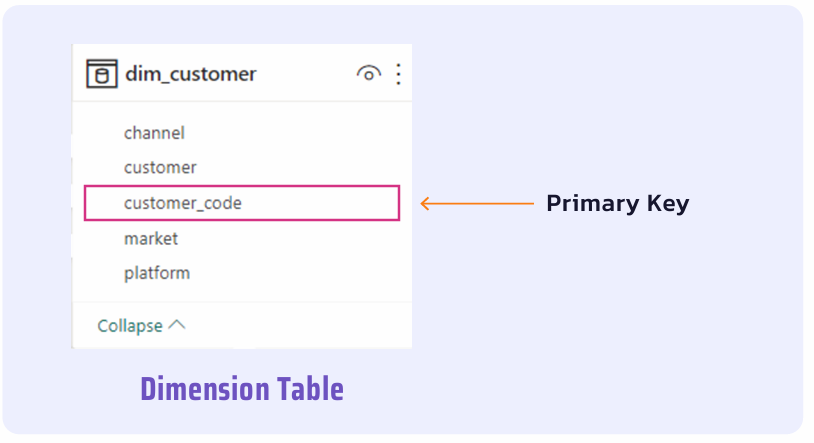
Primary Key: Customer_code.
This column contains unique, non-null values associated with records in fact tables.
Types of Relationships in Data Modeling
Relationships connect tables using common columns such as keys.
There are four major relationship types:
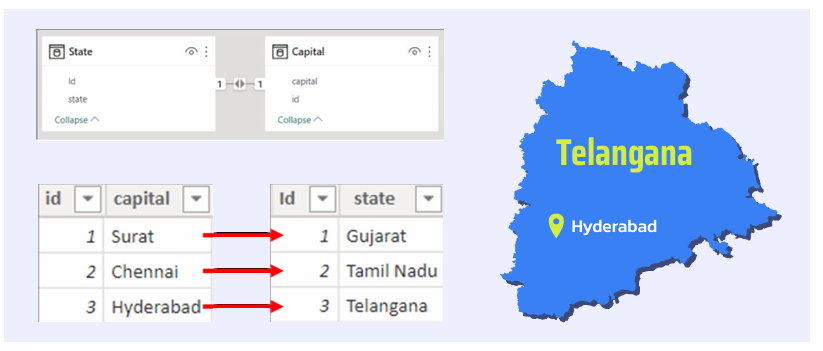
1. One-to-One Relationship
Each row in one table matches only one row in another table.
Example:
- Each capital has one state
- Each employee has one passport record
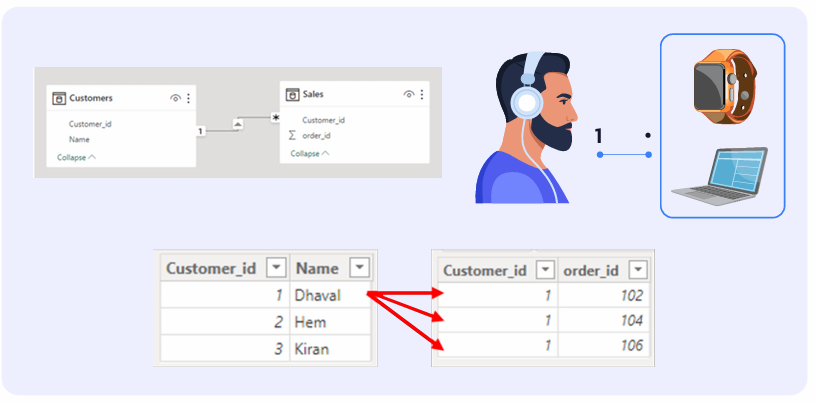
2. One-to-Many Relationship
One record in the first table can relate to multiple records in the second table.
Example:
- One customer can place many orders
- One department can have many employees
This is the most common relationship type in databases.
One-to-Many Relationship
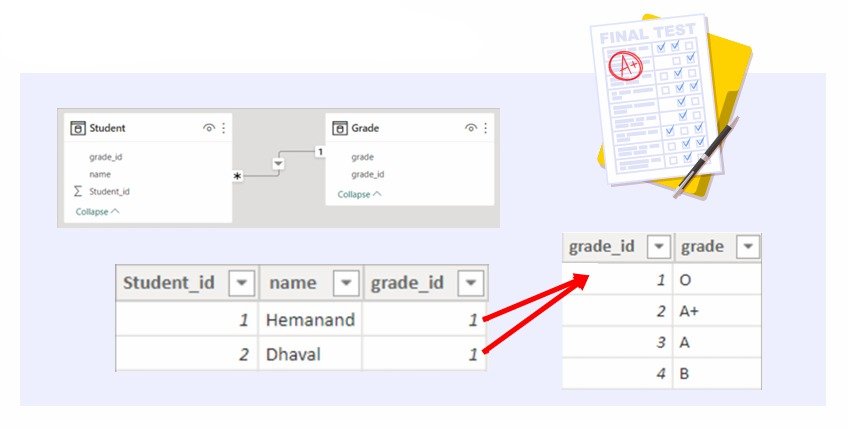
3. Many-to-One Relationship
Many records in one table relate to a single record in another table.
Example:
- Many students may receive the same grade
- Many employees may belong to one department
This is simply the reverse perspective of one-to-many.
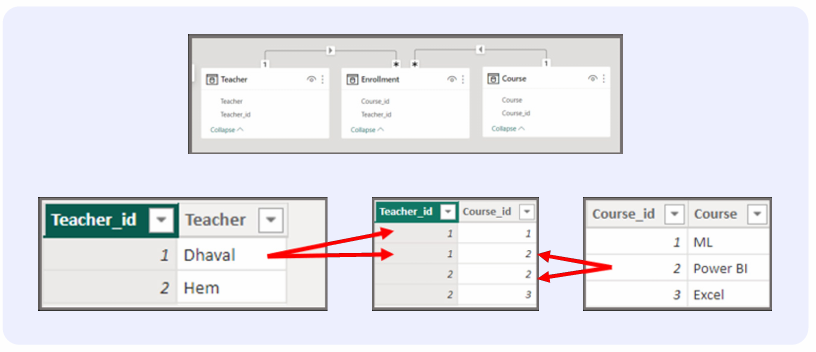
4. Many-to-Many Relationship
Multiple records from one table relate to multiple records in another table.
Example:
- Students enroll in many courses
- Courses contain many students
Another example:
- A teacher can teach multiple subjects
- A subject can be taught by multiple teachers
This relationship is usually managed using a bridge or junction table.
Why Data Modeling Is Important
Good data modeling provides several benefits:
- Improves data consistency
- Reduces duplication
- Makes reporting easier
- Enhances query performance
- Supports business growth
- Simplifies maintenance
- Builds trust in analytics
Without proper modeling, databases often become slow, confusing, and difficult to manage.
Final Thoughts
Data modeling is the foundation of any successful database system. It helps transform raw business requirements into a structured design that developers and analysts can use effectively.
By understanding entities, attributes, relationships, fact tables, dimension tables, and the three types of data models, beginners can build a strong base in database design.
Whether you are learning SQL, building dashboards, or designing enterprise systems, mastering data modeling will make you far more effective in handling data.